

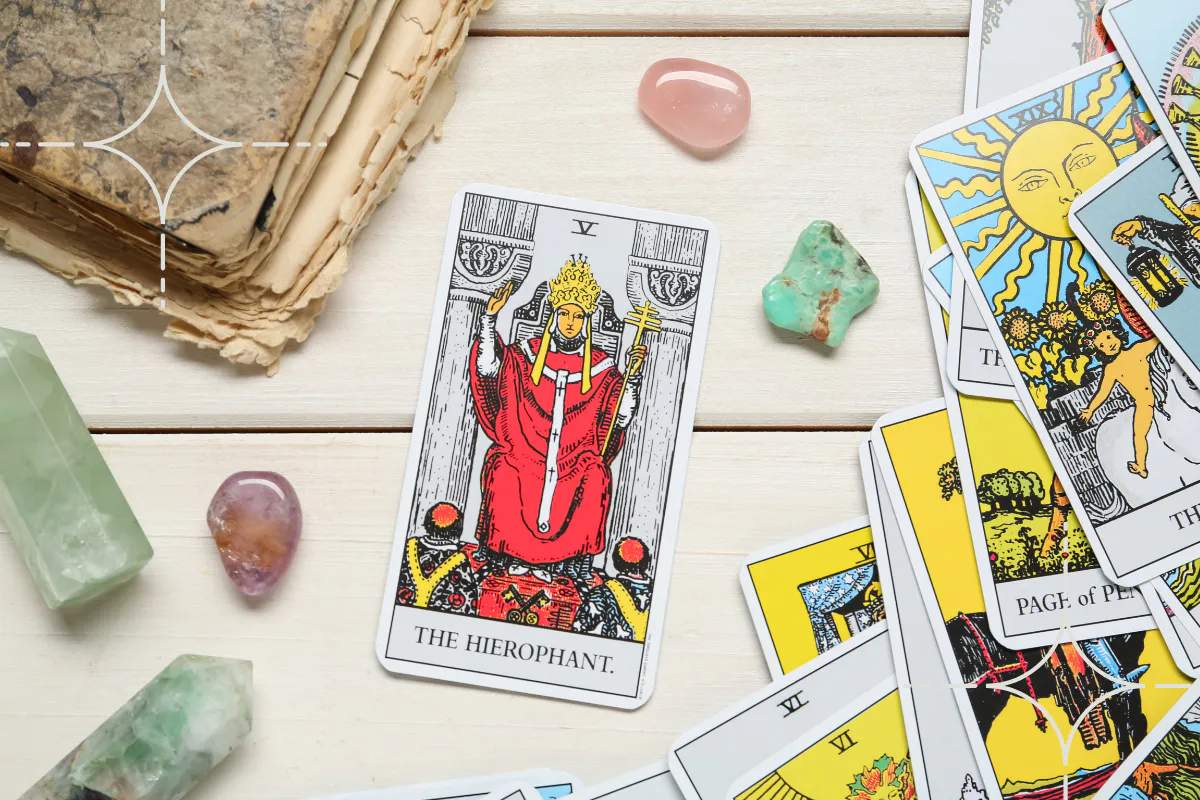

Tarot Journaling Doesn’t Have to Be Complicated
Pulling a single Tarot card can be a great way to start a tarot journaling session. I know tarot journaling can feel overwhelming when you’re first starting, but it doesn’t have to be complicated. What I love about it is that it is quick and doesn’t require you to look up any elaborate tarot spreads. All you need is your go-to tarot deck, a cute journal, and your favorite pen! This is your practice; there is no wrong way to do it.
Here are 3 ways to use a one-card pull to inspire your tarot journaling practice.
Tarot Journaling Supplies


This post may contain affiliate links. As an Amazon Associate, I earn from qualifying purchases. I only recommend products I genuinely think would support your tarot journaling practice.
Why One Tarot Card Is Enough
I find large tarot card spreads to be a great way to examine a specific topic or problem, but for everyday journaling, I usually just want a starting point to get me going.
Simply pulling one tarot card can get your juices flowing, whether you are journaling for deep reflection or writing your morning pages, as mentioned in The Artist’s Way.
A single tarot card can be used as a journaling prompt. Read on, and I’ll show you how.
Use Tarot Card Keywords for Tarot Journaling
Depending on the type of tarot deck you have, each tarot system has a traditional theme or keyword associated with each card. However, let’s keep it simple; tarot systems are a whole topic in themselves.
So instead, pull out the guidebook for your tarot deck. It almost always has one or two keywords to tell you what the card is about. Use that keyword as a prompt for your journaling.
Example of Keyword Journaling: The Hermit Tarot Card
The Hermit Card represents: reflection, solitude, and inner wisdom. So you could journal about :
Is there anything my inner voice is trying to tell me, but I’m too distracted to hear?
Is there something going on in my life that I need to stop and take a closer look at?
Do I have any alone time, and if so, is it healthy?
Let Your Intuition Guide Your Tarot Journaling
For this method, I am going to have you put the guidebook down and rely solely on your intuition.
When you pull your tarot card, how does it make you feel? Start writing about that feeling, when you last felt that way, or how that experience went.
This method is great because it doesn’t require memorization and allows your tarot journaling practice to feel more personal and intuitive.
Pay Attention to the Details in the card:
You can look at the art as a whole, or you can go further and look at the symbols, numerology, colors, or body language found in the card imagery.
Symbols and animals all hold personal meaning to people. Use that to start your journaling.
Click Here for More About Color Symbolism in Tarot.
Click Here for More about Numerology in Tarot.
Faces looking to the left reflect the past, forward means the present, and the right looks toward the future.
Use the Tarot Guidebook Meaning to Inspire Your Writing
Deck creators put a lot of time and attention into their guidebooks. This method is a great way to form a deeper connection and understanding of your deck. Click Here to Learn More About Connecting to Your Tarot Deck
The guidebook is a helpful tool and can show you things about your deck you never realized. All you need to do is read the guidebook description for the card you pulled. Sometimes they even have questions for you to answer. Start journaling about what is mentioned or asked in the guidebook.
Final Thoughts on Tarot Journaling With One Card
I hope you found these suggestions helpful. This tarot journaling practice is meant to feel approachable and meaningful. I want you to be excited to pull out your tarot deck, and I want journaling to be a fun practice that you find meaningful and helpful.
None of this is meant to stress you out. It doesn’t have to be perfect. Do it as often as you want. It’s ok if you don’t do it every day. Let’s take the pressure off ourselves and just have fun!
You can turn this practice into a quiet, reflective ritual that is personal to you.


